Theory to Practice: AI in Action for Classrooms
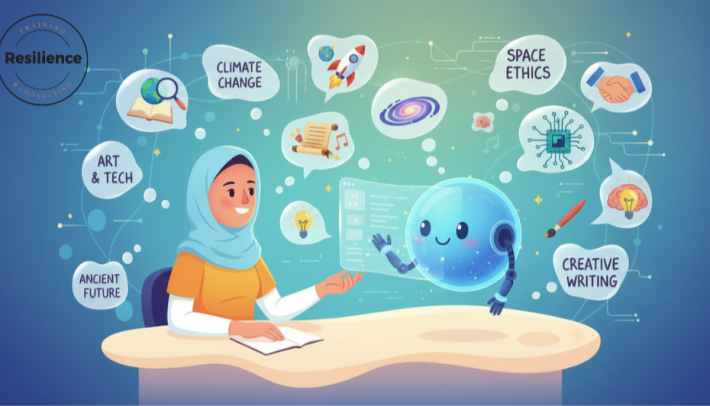
Let’s break down different layers of AI in simple terms to see how these “layers” can boost learning in the classroom.
Machine Learning:
Imagine a platform that notices a student keeps missing fraction questions. ML flags this early, giving the teacher insights and the student personalized practice, so no one falls behind.
Neural Networks:
Think of a reading app that “learns” how each child reads. If a student struggles with certain words, it slows down and gives easier texts. If they’re advanced, it challenges them with harder ones.
Deep Learning:
Language apps using deep learning can listen to a student’s pronunciation in English or Arabic and give instant, accurate feedback just like a personal tutor available anytime.
Generative AI:
Students can use AI to brainstorm essay ideas, create artwork for projects, or practice debate arguments. Teachers can instantly generate worksheets at different difficulty levels, saving hours of prep time.
With AI, the goal isn’t to replace teachers, it’s to empower teachers and unlock every learner’s potential. The new art of teaching is facilitating learning with AI to guide students in deeper learning, critical thinking and innovation.
How are you exploring AI in your teaching and learning?
Visited 28 times, 1 visit(s) today